Built for real operators.
Nine live agents, document vision and practical U.S.-style business structure in plain English.
The public response proved the idea could travel. The products prove it can be useful: clear personal assistants for business, careers, college and difficult paperwork—built for ordinary people, not prompt engineers.
These are not projections or manufactured testimonials. They are snapshots from the week a founder-built system crossed languages, industries and continents in public. Drag, swipe or use the arrows to move through them.
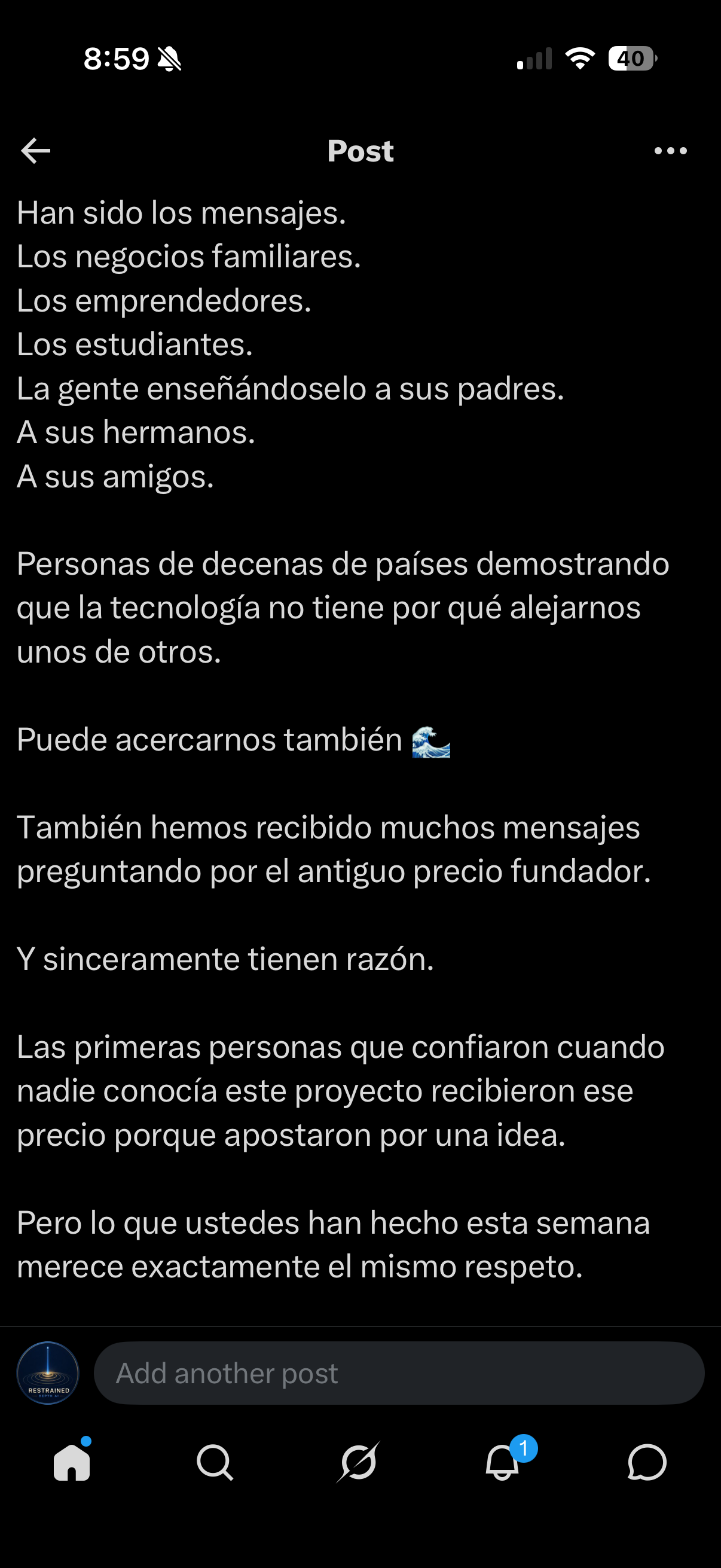
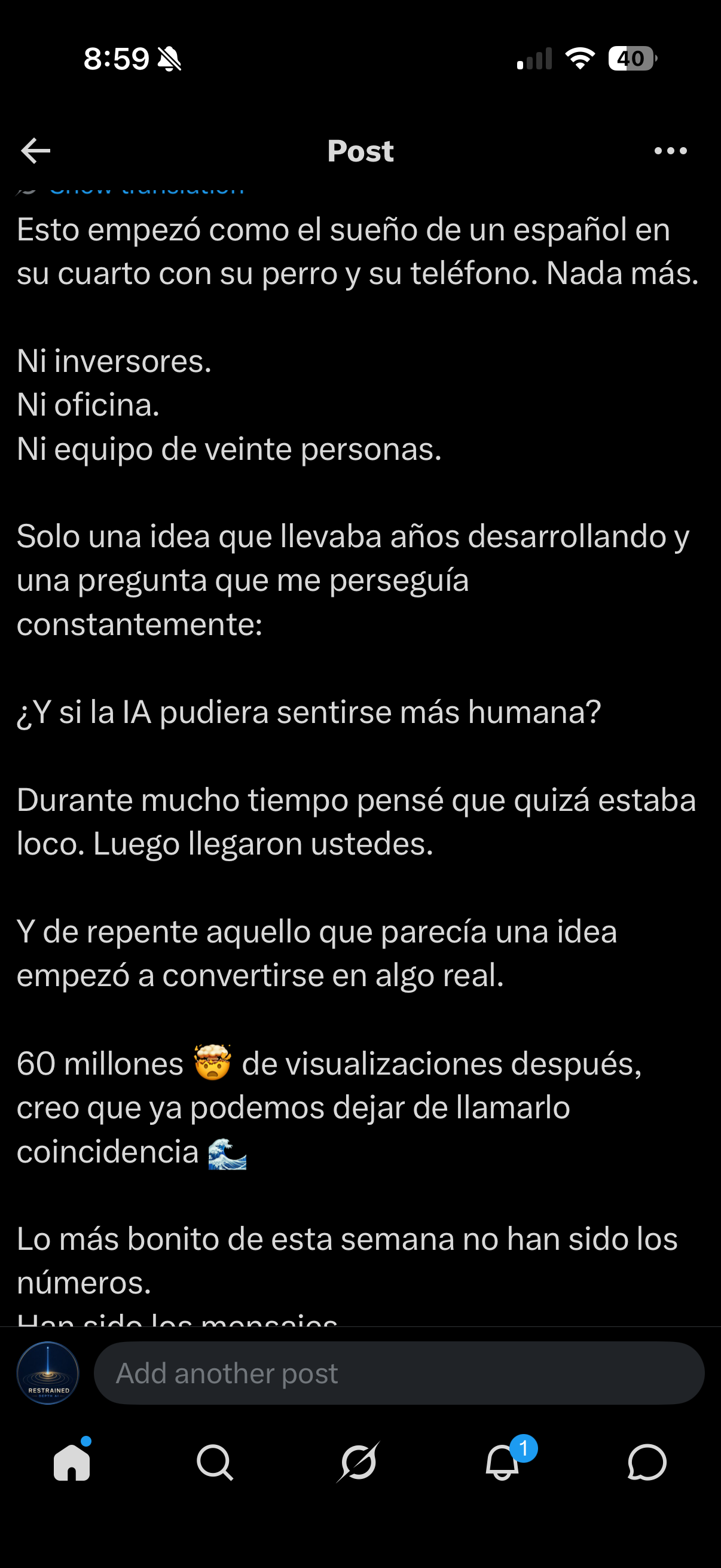
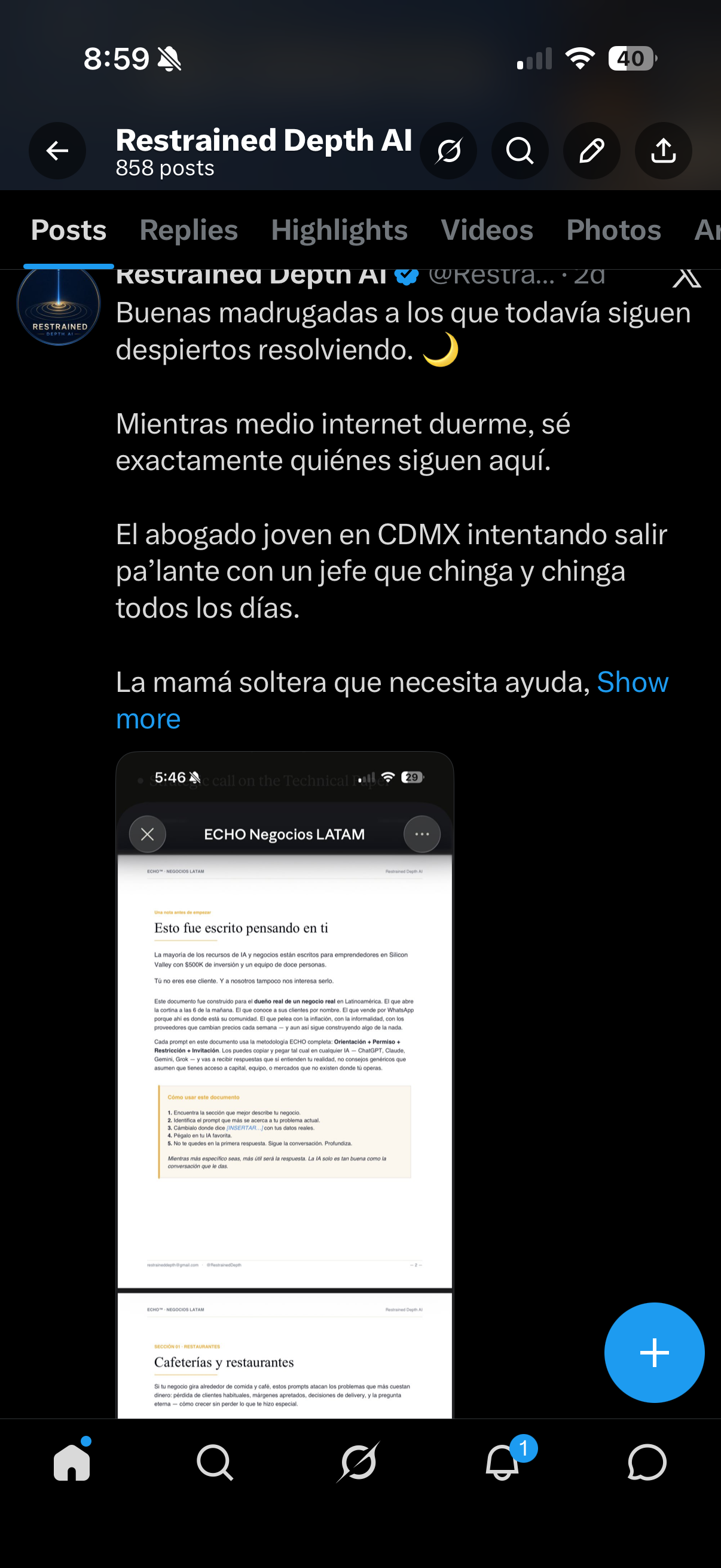
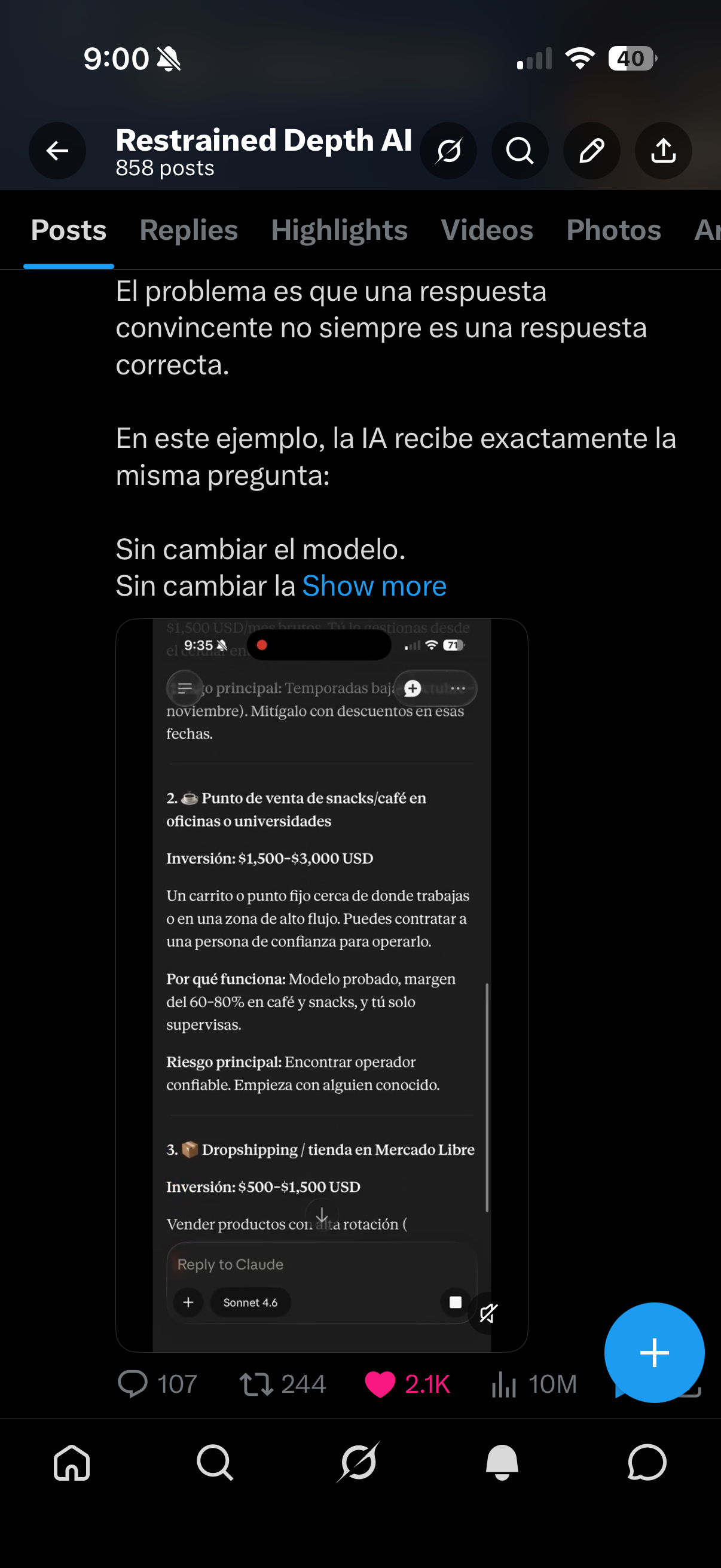
The first version was intentionally simple: two copy-and-paste resources that translated marketing and U.S.-style business operations into language small operators could actually use. The public response proved the need. Then we rebuilt the intelligence inside those documents as a real app—easier to open, easier to use and far more capable.
A real document enters the live app. The correct business room reads it, marks what is uncertain and returns a safer next decision. No mock interface.
ECHO Business is a browser-based app with nine specialized live agents. Each room handles one kind of business decision, remembers the few details you give it about your company and turns the problem in front of you into a practical next move. No prompt setup. No app-store download. No membership required.
You do not have to explain your whole business every time. Choose the room that matches the decision and work one step at a time.
Inside Fair Pricing, Getting Customers, The Money and Suppliers, you can attach a camera photo or PDF and ask the live agent to work from the actual document.
The product is self-contained and designed for people who have never built an AI workflow. If you can open a link and choose a button, you can use it.
What began as two useful resources is now nine live business agents, document vision and a guided path from problem to next move—for the same one-time price as a cup of coffee.
Nine live agents, document vision and practical U.S.-style business structure in plain English.
La edición completa en español, con la versión inglesa incluida en la entrega.
Bản tiếng Việt đầy đủ, kèm liên kết bản tiếng Anh trong phần giao sản phẩm.
日本語の完全版に加え、購入後は英語版へのリンクも受け取れます。
As a thank-you to the families and communities that carried this company across the world, we built ECHO Amparo from our founder's personal journey through disability, benefits and appeals. You do not have to buy anything to use it. Try the way we build, keep it for the people you love and decide from there whether the $4.99 business team belongs in your own work.
ECHO Amparo makes the hardest weeks of U.S. paperwork understandable: benefits, medical leave, disability, unemployment, denial notices and appeals. Bring the letter that changed the temperature of the room. Amparo helps translate what it says, what deserves verification and what to organize before the next conversation.
Public beta · No account · No card · U.S. systems only · Explains and organizes; never decides eligibility, calculates deadlines, files a claim or replaces official or licensed help · Verify important decisions at the official source
Our commitment: Amparo remains free in every language we support for as long as Restrained Depth is operating and can provide the service responsibly.
A real resolved SSA overpayment notice, identifying details removed, decoded in four languages and connected to official resources. No sample copy. No invented outcome.
You can leave this page with Amparo and never spend a dollar. If your work carries more risk, the deeper methodology, verification layer and direct implementation paths continue below.
These are the failure modes that ship every AI workflow back to “almost good enough.” They're not prompt problems, they're how the model behaves under load. ECHO is patent-pending on systems & methods that address each one directly.
Most prompts treat hallucination as a tone problem (“be accurate, don't make things up”). ECHO treats it as a constraint problem, the model gets a frame that makes confident fabrication structurally harder than honest uncertainty.
The longer the chat, the more the model loses your thread, your voice, your values, the actual problem. ECHO installs an anchor structure that holds alignment when the conversation gets heavy, technical, or recursive.
Jumping from strategy to clinical to copy to code? Most prompts shatter. ECHO carries one coherent voice and logic across every domain change so a single session can produce a deliverable that sounds like one person made it.
“Those aren't prompt-pack problems. They're methodology problems.” That's why ECHO exists, and why no template, library, or super-prompt has fixed them yet.
You could give this to a gardener and he would become a CEO.
Every product on this page started as something done in person. Explaining a benefits packet to a crew that had already been told three different answers. Running a career workshop inside a treatment center. Teaching a lecture hall to understand a system instead of memorizing it. The software is that work, written down. The work itself is still available.
Two people. One table. No screen in between.
I cannot sell you a viral moment. What I can do is walk you through exactly how one was built, in four languages, across three continents, by one person with a laptop and a dog, and tell you honestly which parts of it apply to your room and which parts do not.
This line of work found us. The business and marketing materials were the ones people kept asking about, in every language, so that is where the products went first. The consulting stayed where it started: one conversation at a time.
The ECHO Activator is a web app, included, that compiles the patent-pending method into one block of text, tuned to what you're actually working on. Paste it into Claude, ChatGPT, Gemini, Grok, or a local model: same model, different conversation, from message one.
First response. No fine-tuning. No API. The ECHO Activator App: patent-pending method built by a clinician. Works on any LLM.
Most prompting frameworks were built by engineers solving an engineering problem. ECHO was built by a clinician solving a listening problem. The difference shows up in the first reply. Narrative therapy gave me the architecture; years inside Fortune 500 leadership gave me the test cases; daily practice with frontier AI gave me the shape it takes now. I built the methodology I wanted to exist. Patent pending was the side effect, not the goal.
⁂ The founder · Restrained Depth
I'm a mobile luxury hairdresser. ECHO helped me build the entire business, the booking flow, the brand, the client experience, the pricing, tailored to going to clients instead of a salon. It understood my model, not a generic one.
ECHO built my whole fitness brand with me, the website, the app, my diet plans and workout programs, even client session booking. It felt like it actually knew my coaching. I'd given up on AI before this.
I handle health & safety for a Fortune 80. I use ECHO for the nuances of complex workers' comp cases, the stuff generic AI flattens. It holds the detail and the judgment a real case needs.
The $4.99 assistant is the simple doorway. Premium and direct implementation remain available without forcing every visitor through the same offer.
For the owner building the plan, setting the price, finding customers or figuring out what comes next—without another subscription.
For people using AI on work where confidence is not enough. Audit the output, see where the thread drifted and recover it.
A focused 50-minute working session on any project, decision or implementation problem. We build the path with you; written next steps and follow-up technical support are included.
Choose the language that feels natural. Pay $4.99 once. Open the assistant and start with the decision already sitting on your counter.

Builders and operators, in their own words.
§ Real comments · X · @restraineddepth